I’ve finally been watching some films again. Let’s get right into it.
——————————————————————————————-
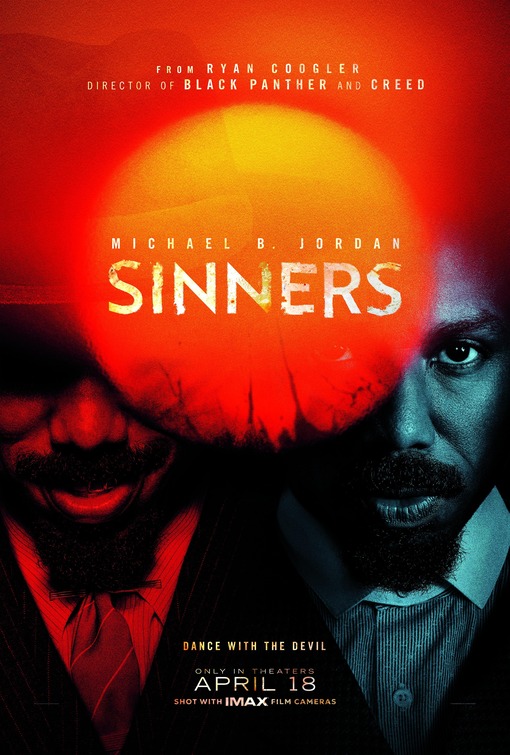
Sinners (2025)
It’s a mechanical jukebox of a horror film, a lot of fun and a real sense of valued community in the frames. Michael B. Jordan plays two roles, a cousin duo, setting up a ‘juke joint’ in the Mississippi Delta circa 1932; it’s not long before the blues, vampires, and some dangerous filmmaking spark fire. It has some real abstract bluesy lyricalness among the rollercoaster. Some of it a bit wonky, almost like the walls shaking and rattling apart, but fantastic performances and really sweet material keep the walls from coming down. It has a sense of idealism that smashes the nightmare home, the thing that makes people go to the movies for. It’s unrepentant in a striving for an intelligent tragedy of magic and terror.
It has a great sense of rhythm, space, geometry of languages, speech, inotation, cultures, behaviours and mannnerisms. It’s script and performances contain layers of codes, code-switching, the interplay of boundaries and expectations across cultures, races. It’s so well done, and in some ways part of a presentation of revisionist style American folklore that excels because of its history, while still able to visually drift into surrealism, or at least ‘beyond realism’. Quentin Tarantino tried to do things like this in Django Unchained (2012), but it exceeds those brute exploitation film tendencies and moves into a space of more genuine, authentic character interactions, which gives it a sense of maturity lacking in Django. Quite simply there are avenues available to presentations of thought, dialogue, action that Coogler can present genuinely because he’s not looking at black culture from outside of it, and this really enriches these delicate little moments permeating Coogler’s vision.
The music sequencing really accelerates past the usual limit of experience in a certain frame. It’s bold, striving to be something else. Music floods into the seams of the celluloid, and suddenly the position of the world is superimposed through time, a connected line of histories in a singular frame, a singular movement, reaching up towards the sky and the void and the fire against the dark.
You’d have to see it to understand what I’m talking about. At times it seems to revel in a slightly grungier historical epic mode of filmmaking. Smart little snaps of dialogue, action, keep the train trundling along. It brings in wide vistas, smashes them against characters pulling comedy, horror, tragedy from the earth, all caught in the mechanics of a 2000s horror film scaffolding. The type which worked just as well on DVD on sale as it does in an ampitheatre.
The characters and their stories build a collective sense of atmosphere on screen; at times each one rising above the rest to give them a moment, an arc, a rainbow, but always sinking back into this primordial swamp of interconnecting characters and forces, pushing and antagonising against each other, or against the world.
It’s smart, blood drenched, and pulling up the roots of something that it’s ending delivers on, in a way that is smarter than the average horror film. Humans can be monsters, monsters can be human, and the boundaries of both need joy and spirit to provide an environment, an atmosphere for both to create transgression, absolution, and peace.
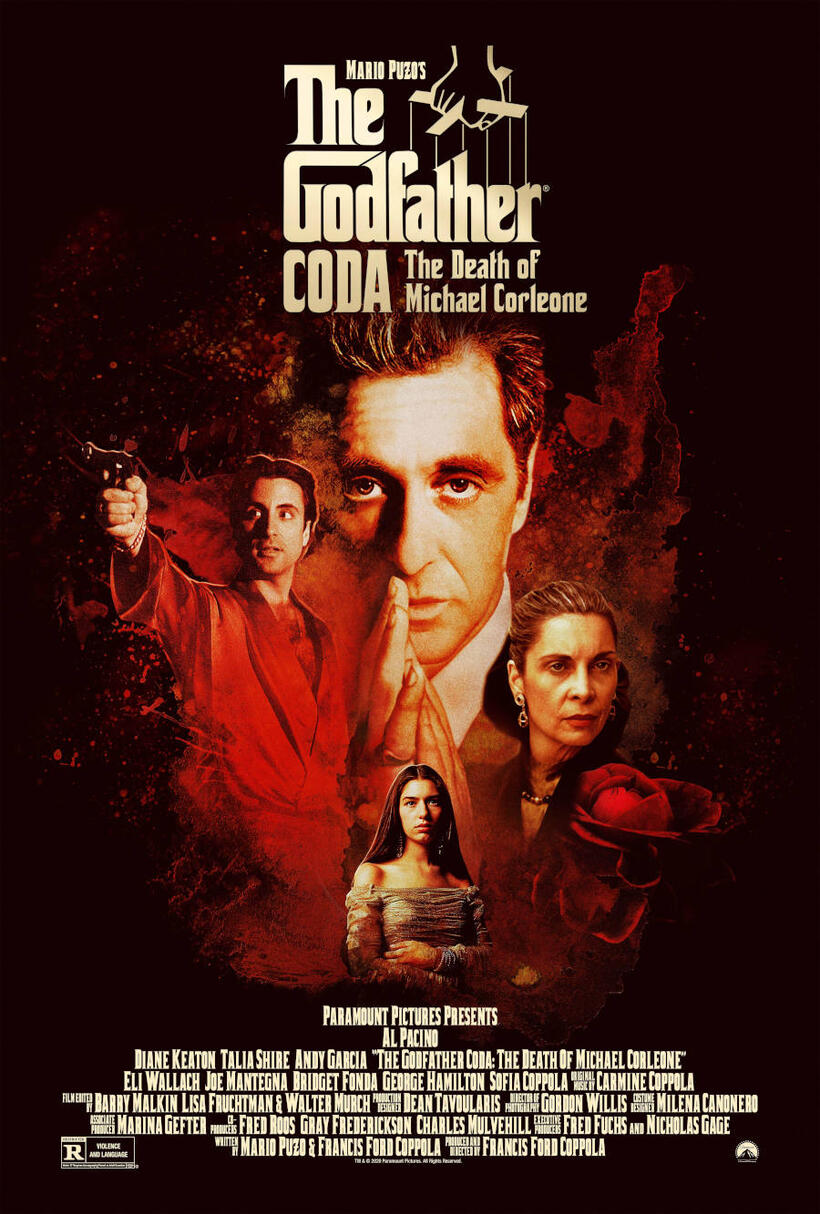
Mario Puzo’s The Godafther: Coda: The Death of Michael Corleone (2020, Dir. Francis Ford Coppola)
This was interesting. It slightly refshifts an old work, something like stitching together a reworking of a symphony, better and restored. My housemate said “It doesn’t even come close to the other two still”, which I think is more than fair. It’s a shame that some of the film still doesn’t resonate in the same way, there are moments where it it feels like a shade of the previous film’s great dialogue, excellent characterisation, sense of atmosphere. An echo on marble walls.
It is easy to see the seeds of the filmmaker who made Megalopolis (2024) in this one. The man in power is just too great of an archetype to marvel at even when the material presented here is softer, less of the smooth velvet that made Part I and II. Everyone has highlights but some people have hams. It’s a family affair, but it’s interesting how the echoes of humanity play out in Sinners in comparison, among a different kind of collective humanity, Coda is very isolated, very troubled by the troubles of the rich. Still it is full of anguish at times, bursting like a wellspring in a desert.
Some elements have gotten better in the reshaping, recoding; Al Pacino, Diane Keaton, Sofia Coppola, Andy Garcia, all of them seem to glimmer brighter. The film and its participants have a watchability that is atmospheric, it’s running time aside. It is tragic watching the man who controlled so much suffer in the wake of that domination. Diane Keaton especially gets more room than ever before to show why Michael’s story is sadder to those around him who cannot know him, and a certain elegance is given a more forthright due here. You can feel the invisible strings of compromises pulling less tight now.
The editing is put together so operatically in its finish especially, it cuts so crisply across dramatic excursions of the chess piece characters. The changes to the beginning and ending are interesting, vary the taste of the film like a vintage to a wine. The moral weight of guilt is a heavy one, so it’s nice to see Frances recut the gemstone a little sharper, a little leaner. It still leaves a bitter taste, but if you can’t step into the same river twice, you can certainly re-edit its shape to flow to a more desired sea.
That’s all for now.
-Alex

 Film Pravda
Leave a comment